

- Article
- Growing my Business
- Enable Growth
Unlocking Corporate growth opportunities with HSBC UK
Across the UK, mid-sized firms are not just navigating uncertainty but thriving within it. Despite persistent economic headwinds, these businesses are showing remarkable resilience and the agility to seize strategic growth opportunities.

James Cundy
Head of Mid Market Corporates and Structured Finance
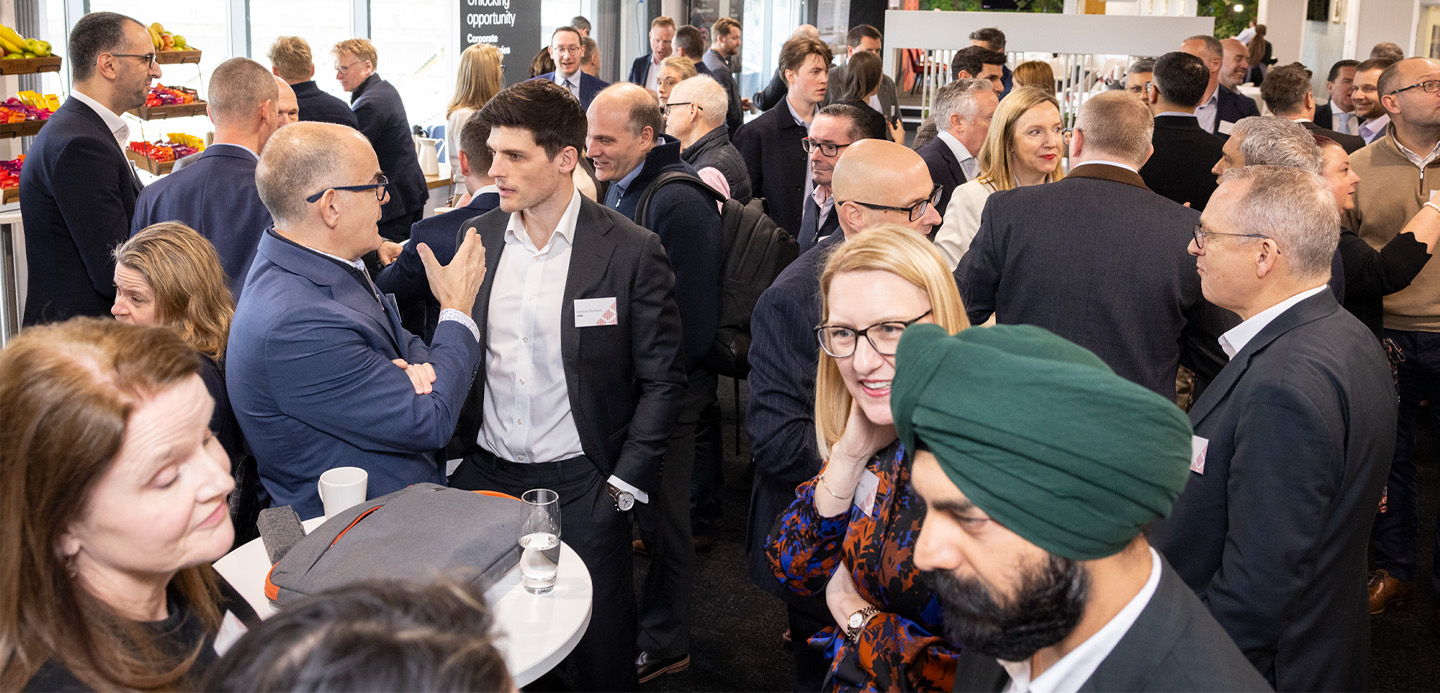
We brought together mid-sized businesses from across the UK to discuss growth, resilience and the opportunities emerging in 2026.
Use the below links to quickly jump to each section of this article
Corporate Growth: Powering the UK Economy
Finding opportunity in times of volatility
Corporate Growth: Powering the UK Economy
Mid-sized corporates are the UK’s unsung engine of growth, with an oversized impact on the UK economy.
£745 billion
Is what they are forecast to contribute to the UK economy by 2028.
27%
Is the UK gross value added (GVA) and creating an additional 1.9 million jobs.
As our recent Corporate Tracker highlights, most companies are growing faster than the UK economy. Between 2021 and 2024, the UK economy grew at a rate of 7.73% per year, based on GVA. In the same period, the fastest-growing UK sectors in each region all showed growth above 10%. This pattern suggests that where growth is strongest, it’s driven by sectorial composition and specialism, rather than by regional exposure to national growth. Here are the highlights:
- Yorkshire and the Humber: The heavy equipment and machinery sector experienced 19.8% annual turnover growth, followed by professional and business services at 17.6%.
- East of England: A growth of 21.9% put Software-as-a-Service (SaaS) out ahead in this part of the country, with the region’s role as a national innovation hub reflected in a robust 15.2% for both digital and life sciences.
- North West: Growth is concentrated in a resilient services economy, with insurance leading at 16.6% growth.
- North East: The key growth engine in this region is automotive, with 21%.
- West Midlands: Automotive led the way again, with 17.7% growth, with digital and technology emerging as a secondary sectoral growth driver (13.7%).
- East Midlands: Financial services had a 16% annual turnover growth.
- South West: Human resources saw a significant rise of 22.8%.
- South East: Property development and construction is out in front, with 18.1%.
- London: Growth is strongest in the defence sector, which leads at 11.7%.
- Scotland: With 11.8%, oil and gas is Scotland’s growth leader.
- Wales: Another strong region for automotive, this time growing an impressive 46.6%.
- Northern Ireland: The manufacturing sector showed the most growth in this region (15.2%.)
“This analysis highlights the importance of established regional clusters,” says James Cundy, Head of Mid-Market Corporates and Structured Finance, HSBC UK. “Recognising these regional strengths is essential to supporting trade and investment, financing supply chains and backing sustainable growth across the UK.”
“For banks and investors, these patterns matter because growth is shaped as much by local industrial structures as by sector.”
At a national level, the Corporate Tracker shows that advanced manufacturing, clean energy, life sciences and defence are the growth-driving sectors where these businesses are most likely to tip the needle.
James Cundy
Head of Mid Market Corporates and Structured Finance
Recognising these regional strengths is essential to supporting trade and investment.
Finding opportunity in times of volatility
To help support growth, HSBC UK recently hosted a series of events for 600 mid-sized businesses across the country to discuss how corporates can unlock opportunities in 2026.
Speakers included Sir Jeremy Hunt, MP and former Chancellor of the Exchequer, who shared his views on the macro environment and the challenges for mid-sized firms, drawing on his previous experience as Chancellor of the Exchequer and before that as a business founder.
“At a time of great uncertainty, there’s always a temptation to focus on the immediate crisis. What was encouraging at this event was to see how many people recognise that it’s also a time of big opportunity. This is a time when smart operators should be investing, not cutting back.”
Sir Jeremy’s words are backed up by HSBC’s Global Investment Research, which spoke to 2,500 businesses and 500 institutional investors across 10 markets. The research suggests that global economic volatility has become the new normal. A structural characteristic of the operating environment has meant UK businesses and institutional investors are no longer waiting for conditions to stabilise. Instead, they’re adapting their business strategies to take advantage.
A striking 94% of UK respondents agreed that significant opportunities for international growth exist despite this volatility, driving them to anticipate moderate to significant repositioning initiatives within the next three years.
This proactive stance marks a clear shift in perspective, with 79% of UK leaders perceiving the current environment as a distinct window of opportunity. They are actively seizing the moment to reassess where they operate, how they invest and how they manage risk.
94%
of UK participants agree that despite volatility, there are significant opportunities for international growth.
79%
of UK respondents say the current environment presents a rare window to reposition for long-term advantage.
“Whether it’s their product, but also the markets they’re operating in, how they can be more productive – particularly through AI – and how and where they should be investing.”
This growth will be enhanced by the UK’s disparate regions – which, in Sir Jeremy’s view, would make an even bigger impact on the economy if they were given more autonomy.
“We don't set our regions free,” insists the ex-Chancellor. “Manchester is probably the biggest city in the Western world that is not a capital where, to get extra investment, [they must] bang on the doors of the Treasury in London.
“Everywhere else in the world – the mayor of Lyon, the mayor of Stuttgart, the mayor of Austin, Texas – they can raise the funds themselves. We are heading in the right direction, but what we don't have is regions [being able] to raise tax in a substantial way."
Investing in technology to unlock productivity
It’s no surprise that one of the key themes covered at our events has been investing in AI to drive productivity gains and improve competitiveness. While some mid-sized firms questioned how best to effectively harness AI, the technology stands out as a pivotal strategic investment for businesses across the country.
UK-wide research by the Centre for Economics and Business Research (Cebr), on behalf of HSBC UK, underlines the significant impact AI is having:
- In 2025 alone, an estimated 2,500 mid-sized enterprises operationalised AI to improve business operations.
- AI adoption among mid-sized business has jumped from 35% to 55% in just two years.
- By the fourth year of its adoption, AI is estimated to yield a revenue uplift of £4.7 million and a GVA uplift of £1.4 million for a typical mid-sized business, compared to an equivalent non-adopter.
- By 2030, widespread AI adoption among mid-sized firms could unlock £105 billion in extra revenue.
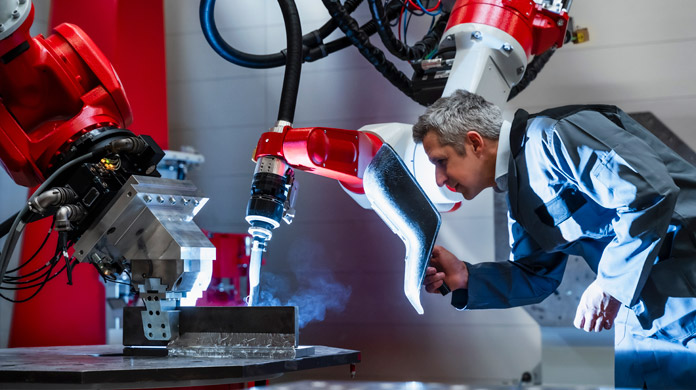
Recognising the importance of AI for growth-focused businesses, HSBC UK recently launched a £5 billion AI & Productivity Financing Initiative. The programme is designed to help UK businesses invest in the skills, systems and technology that can improve productivity and support long-term growth.
“We’re really seeing AI moving at pace,” observes Helen Gbormittah, the Confederation of British Industry’s North West Regional Director. “The UK has a very strong AI innovation ecosystem. But the bigger challenge now is to look at ensuring widespread adoption across the economy, so the benefits really translate into productivity and economic competitiveness, helping businesses answer their strategic investment questions.”
Meanwhile, Jason Sahota, Chair of Tech West Midlands, believes that attitude plays a big part in whether businesses can successfully use AI. “Get the right mindset,” he stresses. “I think if you’ve got the right mindset then you can adopt technology. And rather than waiting to see what it can do, download it, start having a conversation with it and start using it.”
HSBC AI & Productivity Financing Initiative
Boost productivity with our £5bn financing initiative to help UK businesses invest in future-ready capabilities.
How we can help you unlock growth opportunities
For businesses looking to invest and grow in 2026 – we can support you with the right financing solutions and expertise. "HSBC UK is here to help UK mid-sized businesses," says James Cundy. "We can support your domestic growth with our long-standing presence in the region and also facilitate international expansion, thanks to our extensive presence in over 50 markets.
"Don’t just take our word for it. We were recently awarded best commercial bank and joint tied share leader by Greenwich, and we’re Euromoney’s corporate bank of the year.
Lending is subject to status. Eligibility criteria, T&Cs, fees, charges and rates apply
Award-wining Corporate Banking

Recognised as Share Leader Commercial Banking Market Penetration in the UK (Tied), Coalition Greenwich Awards 2026

The UK's Best Bank for Corporates, Euromoney Awards for Excellence, 2025

Best Bank for Commercial Banking in the UK, Coalition Greenwich Awards 2026