
- Article
- Support
- Market Research
AI adoption and mid-sized firm productivity
Mid-sized businesses play a central role in UK growth. Our findings suggest AI adoption could strengthen one of the economy’s most important growth engines.

James Cundy
Head of Mid Market Corporates and Structured Finance, HSBC UK
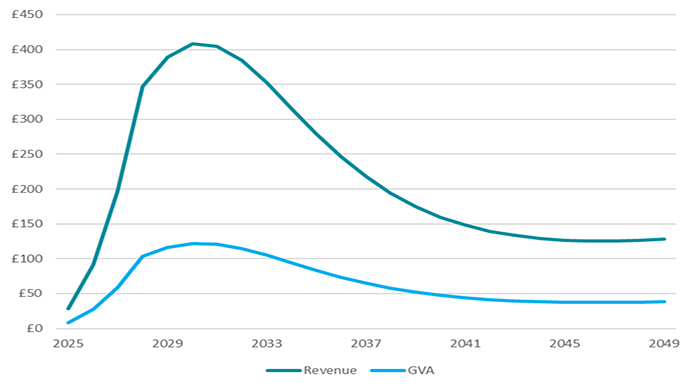
Research conducted by the Centre for Economics and Business Research (Cebr) for HSBC shows that AI adoption could unlock £105bn in additional revenue for UK mid-sized firms1 by 2030.
The study used forecasting and economic modelling to establish that AI is fast becoming a dividing line in the UK economy, separating firms that are accelerating ahead of those at risk of standing still.
AI adoption among midsized firms has jumped
from 35% to 55%
in just two years.
“Productive adopters” embedding AI into operations could gain
£4.5m
in additional revenue within four years.
Mid-sized firms generated
23% more value
per employee than the wider economy.
1 The Cebr report focuses on mid-sized firms, defined as those with annual turnover of between £15 million and £300 million
Insights
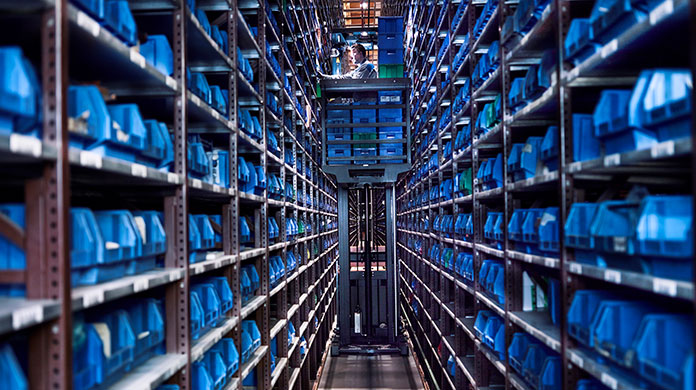
Explore ways to boost productivity through AI adoption with our latest report.
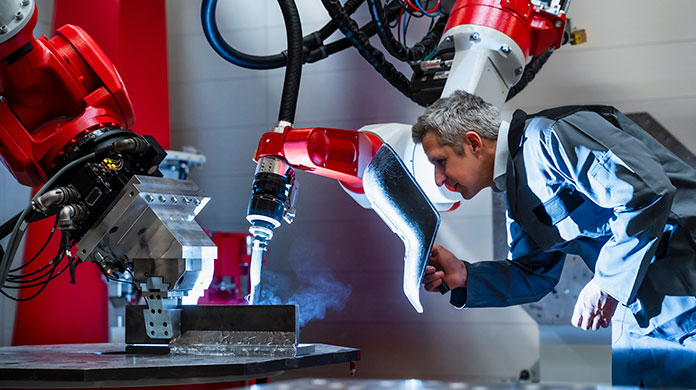
We have launched the £5bn AI & Productivity Financing Initiative to help UK SME and Corporate businesses invest in the skills, systems and technology that can improve productivity and support long-term growth.
Benchmarking productivity
There are around 35,000 mid-sized businesses in the UK, companies with annual turnover between £15 million and £300 million. Often described as the ‘engine room’ of the economy, they combine the investment strength of large firms with the agility of smaller ones, giving them a productive edge. In 2025, mid-sized firms generated 23% more value per employee than the wider economy.
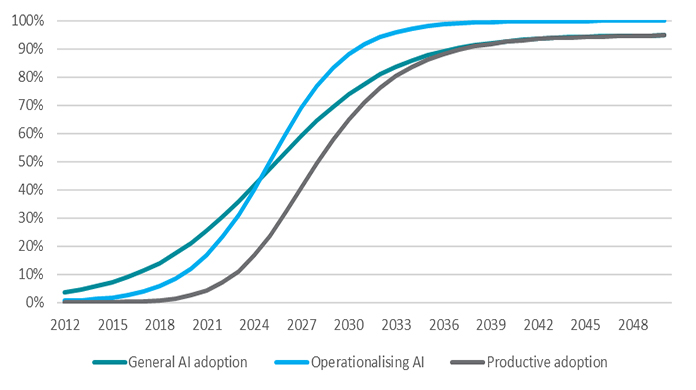
Two years ago, just over a third (35%) of mid-sized firms were using AI in some form. By the end of 2025, that figure had climbed to 55%, reflecting the mainstreaming of large language models, advanced analytics and workflow automation.
The impact of AI adoption on productivity
The research identifies a clear divide between firms experimenting with AI to draft emails or summarise documents and those embedding it into core operations.
Around 24% of mid-sized firms are described as ‘productive adopters’ – businesses integrating AI into forecasting, reporting, supply chain management and customer engagement, in a way that materially transforms performance. The research highlights a relatively steep increase in this rate over the next five years with the share rising to 65% by 2030 and 93% by 2040.
Mind the productivity gap
The research indicates that firms adopting AI in a sustained and integrated way increase revenue per employee by around 4% on average.
For a mid-sized company of average size, ‘productive adoption’ can expect to generate £4.5m in revenue, alongside £1.3m in additional economic value compared with a similar firm that does not adopt the technology within four years.
More than 2,700 mid-sized businesses began what the report describes as ‘productive adoption’ in 2025 alone. Collectively, that cohort is expected to generate £30 billion in additional revenue over the next four years, based on the modelled productivity uplift and projected firm growth.
Continued uptake of AI - combined with the estimated productivity effect - could add £105 billion in revenue and £31 billion in additional economic output by 2030. After that, gains continue, but at a steadier pace as adoption becomes widespread across the mid-market. Looking further ahead, AI-driven productivity improvements among mid-sized firms could generate more than half a trillion pounds in additional turnover by 2050.