- Article

- Support
- Economic Reports
Why inflation can be hard to control
Inflation spikes can be driven by demand or supply shocks but bringing it back under control is rarely straightforward. Policymakers must firstly judge whether price pressures will fade or become embedded through wages and expectations and then adjust interest rates accordingly - a powerful but blunt tool - without unduly weakening growth or employment.
The challenge of bringing inflation down
Inflation can start with a sudden increase in demand or a disruption to supply. It can then persist as households, workers and businesses adjust their expectations and behaviour.
That makes inflation difficult to control. Policymakers must assess not only why prices are rising today, but also whether the pressure is likely to fade or become embedded.
Inflation can come from demand...
Demand-driven inflation occurs when households, businesses or governments want to buy more than the economy can produce. This can happen when incomes are rising, credit is readily available or fiscal policy supports spending.
If the economy is already close to full capacity, businesses may respond by raising prices and wages. Higher interest rates can cool demand by making borrowing more expensive and saving more attractive, but they work with a lag and affect households differently.
...or from supply
Supply shocks reduce the economy’s ability to produce goods and services or increase production costs. Examples include energy-price spikes, weather or transport disruption, and labour shortages.
Higher interest rates cannot create more energy, repair a disrupted supply chain or influence global commodity prices. Policymakers therefore face a trade-off when inflation is supply-driven: tolerate some higher inflation or weaken demand enough to prevent the initial shock from spreading. The latter can mean slower growth and higher unemployment.
Supply shocks are more evident in goods prices
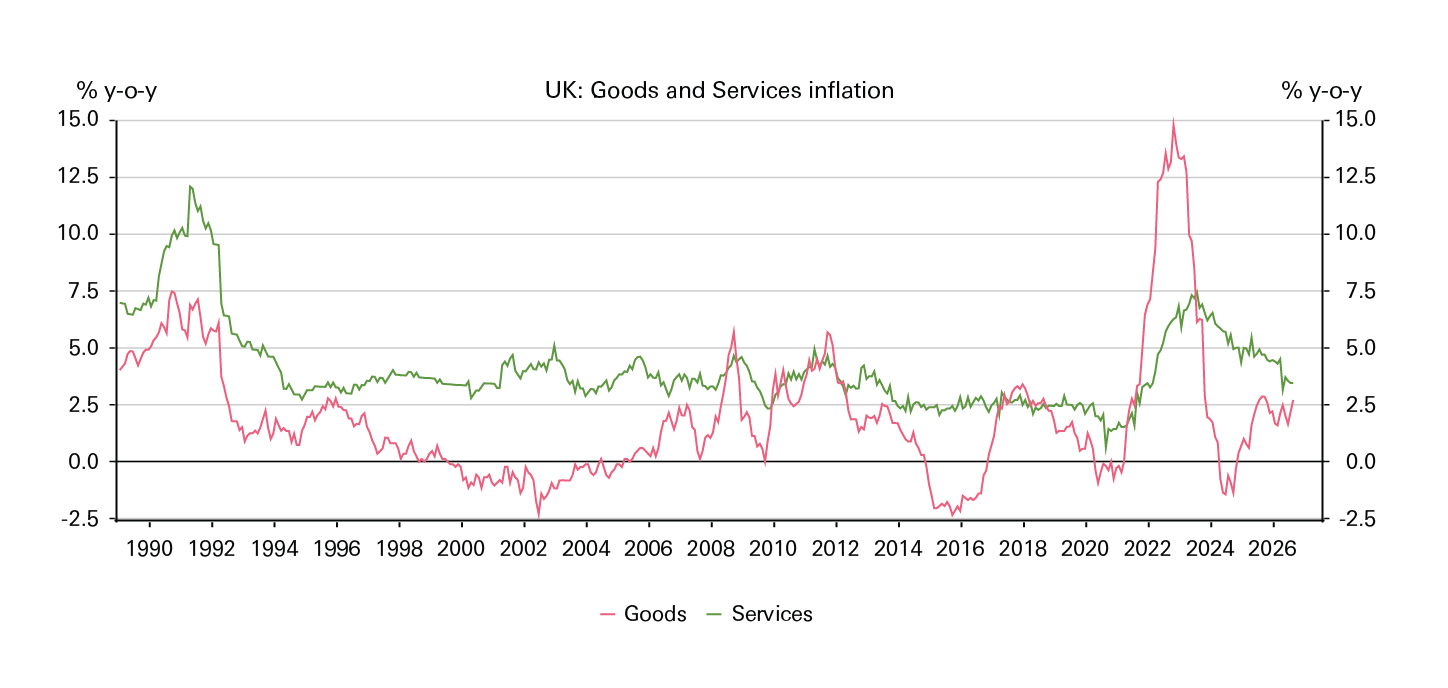
Temporary shocks can become persistent ...
The difficulty for policymakers - particularly when the shock is supply driven - is knowing whether the shock will be temporary or persistent.
- Temporary inflation fades as the original shock passes.
- Persistent inflation continues because price rises are reinforced by wages, expectations or ongoing demand.
A one-off rise in energy prices may lift the price level, and drive a brief inflation rate spike, without causing continuing inflation.
Goods price pressures may ease as supply chains recover, but the shock can become more persistent if workers seek higher wages, businesses raise prices in anticipation of further cost increases, or demand remains robust. That could see a temporary supply shock become evident in services prices - which depend heavily on wages. Yet, evidence of persistent inflation is often only seen with certainty once the shock has passed through the economy.
Expectations and wages matter
If households expect prices to keep rising, they may bring forward purchases or seek larger pay rises to offset the shock, which can make inflation self-reinforcing. This is why central banks place considerable weight on inflation expectation surveys. If expectations remain well anchored - meaning people broadly believe inflation will return to target – higher pay rises are less likely, and temporary shocks are less likely to become embedded. If expectations become unanchored, a more pronounced response from the central bank may be required.
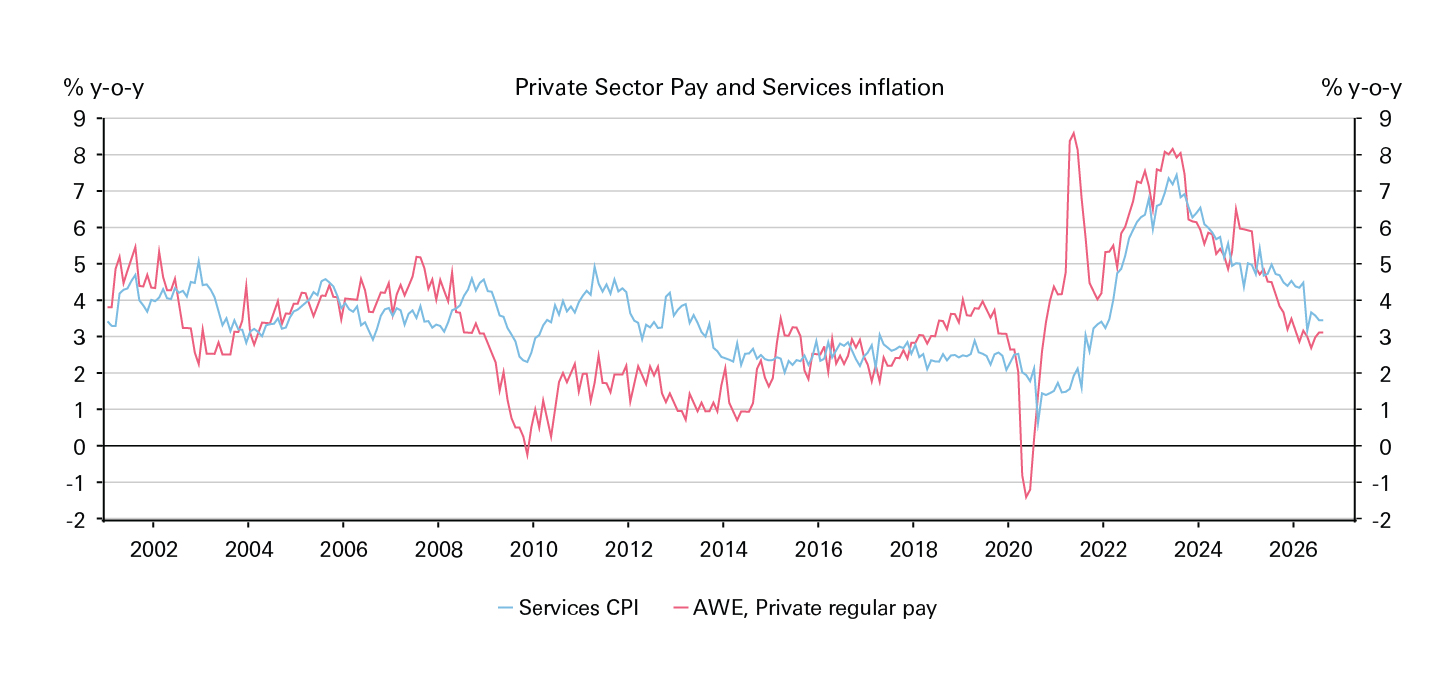
Wages are central because they are both a household income and a business cost. Higher wages need not be inflationary if productivity is also rising. But if wages increase faster than output per worker, businesses may raise prices to protect margins. The challenge is that wage pressure may not materialise until a year or more after the shock and with an even longer delay into prices.
Central bankers worry that price shocks become embedded via higher wages and stronger services price growth
Bringing inflation down involves a blunt tool and trade-offs
While inflation can be driven by various causes, central banks’ primary tool to respond is interest rates, with the goal to keep the inflation rate slow and stable over the medium term by impacting demand in an economy. However, the impact of changes in interest rates can depend on several factors:
- Economic trade-offs. Interest rates affect the economy broadly through household spending, business investment, asset prices, exchange rates and expectations. As such, higher interest rates can come at the detriment to growth and higher unemployment.
- Interest rates are a blunt tool. They can reduce demand, but they can’t produce more energy, repair supply chains or resolve skills shortages. As a result, rates may slow parts of the economy that are already under pressure while doing little to address the original cause of higher prices.
- Time lag of impact. Interest rates take time to pass through to the real economy, particularly in economies that have a high proportion of fixed rate debt. Generally, central banks set policy with an c2-year pass through in mind, and hence focus on forecasted inflation over that time frame.
- Uneven impact. While borrowers may face higher payments, savers may receive more interest income. Fixed-rate mortgage borrowers may initially be protected, whereas renters can face higher housing costs.
The key point
Inflation is difficult to control because it can begin in one part of the economy and spread through others. A supply shock can raise prices; higher prices can influence wage demands; wage growth can lift business costs; and expectations can shape the next round of price-setting.