

- 3 minutes
- Article

- Support
- Economic Reports
- Market Research
UK in Focus: Essential economic news for businesses
Business surveys showed improved demand and a more stable employment outlook in early 2026. However, that, and the Chancellor’s Spring Statement, was overshadowed by events in the Middle East, which are likely to delay inflation reaching 2.0% and create more interest rate uncertainty.
Consumers remain cautious, while the Spring Statement was overshadowed
Official data published for Q4 2025 confirmed the weak end to last year. GDP in the last quarter of the year grew 0.1% q-o-q, while on a per capita basis it fell 0.1%, the second consecutive quarterly decline. However, the turn of the year saw improved momentum and business surveys have pointed to the start of a demand recovery. Moreover, despite a higher unemployment rate, headcount growth appears to be at least stabilising. On the other hand, input prices, including labour costs, continue to squeeze margins.
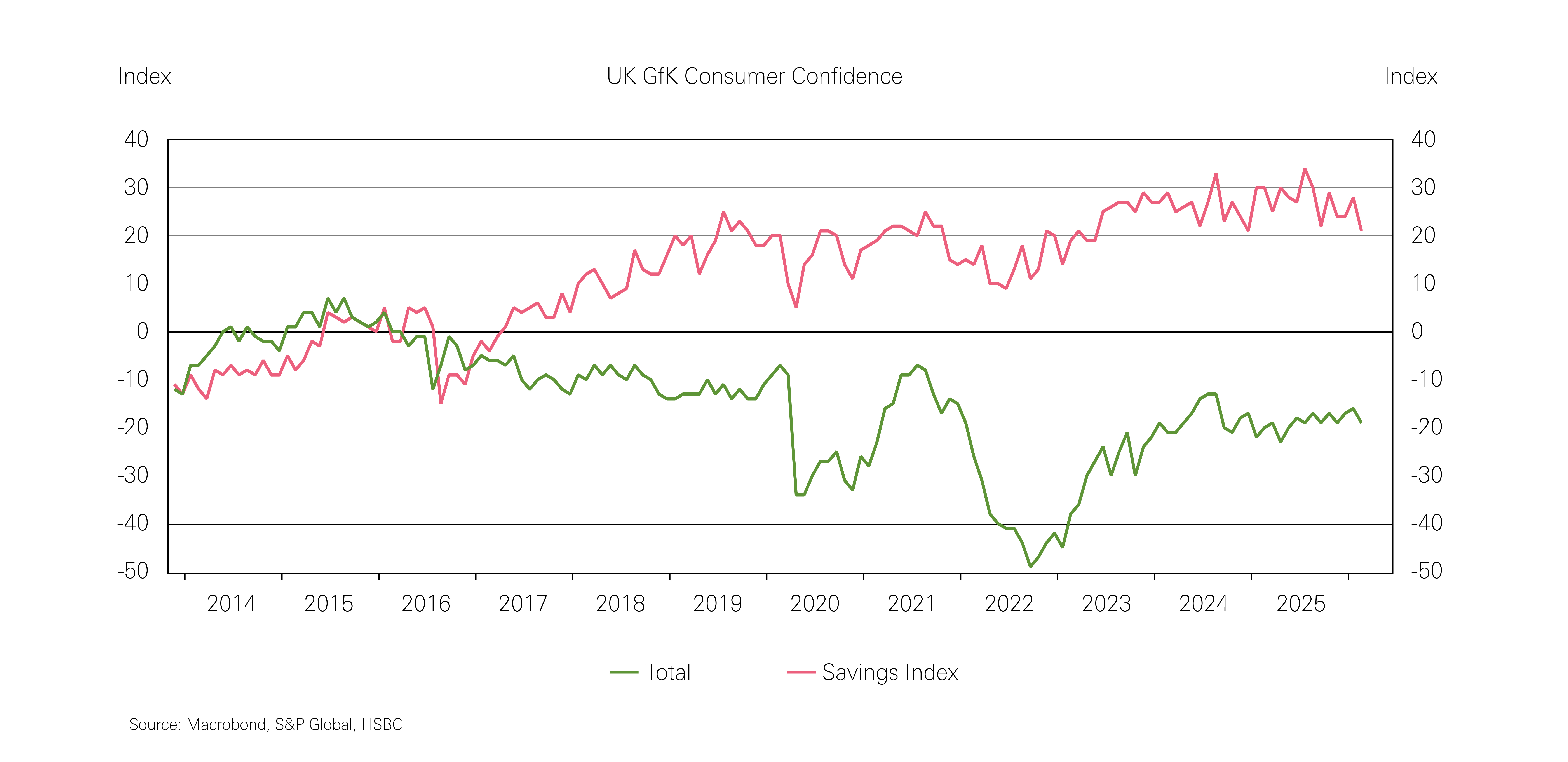
Consumers have remained more cautious – GfK consumer confidence ticked down in February, while intentions to save rose against a backdrop of economic uncertainty, weaker job prospects, and squeezed household budgets. Chancellor Rachel Reeves was keen to remind voters of the measures to cut the cost of living from April 2026 in her Spring Statement. However, despite that, and a marginally better fiscal position expected by the OBR, the forecast update was not just a non-event, but was entirely overshadowed by the conflict in the Middle East.
Higher energy prices could throw inflation and rates off course
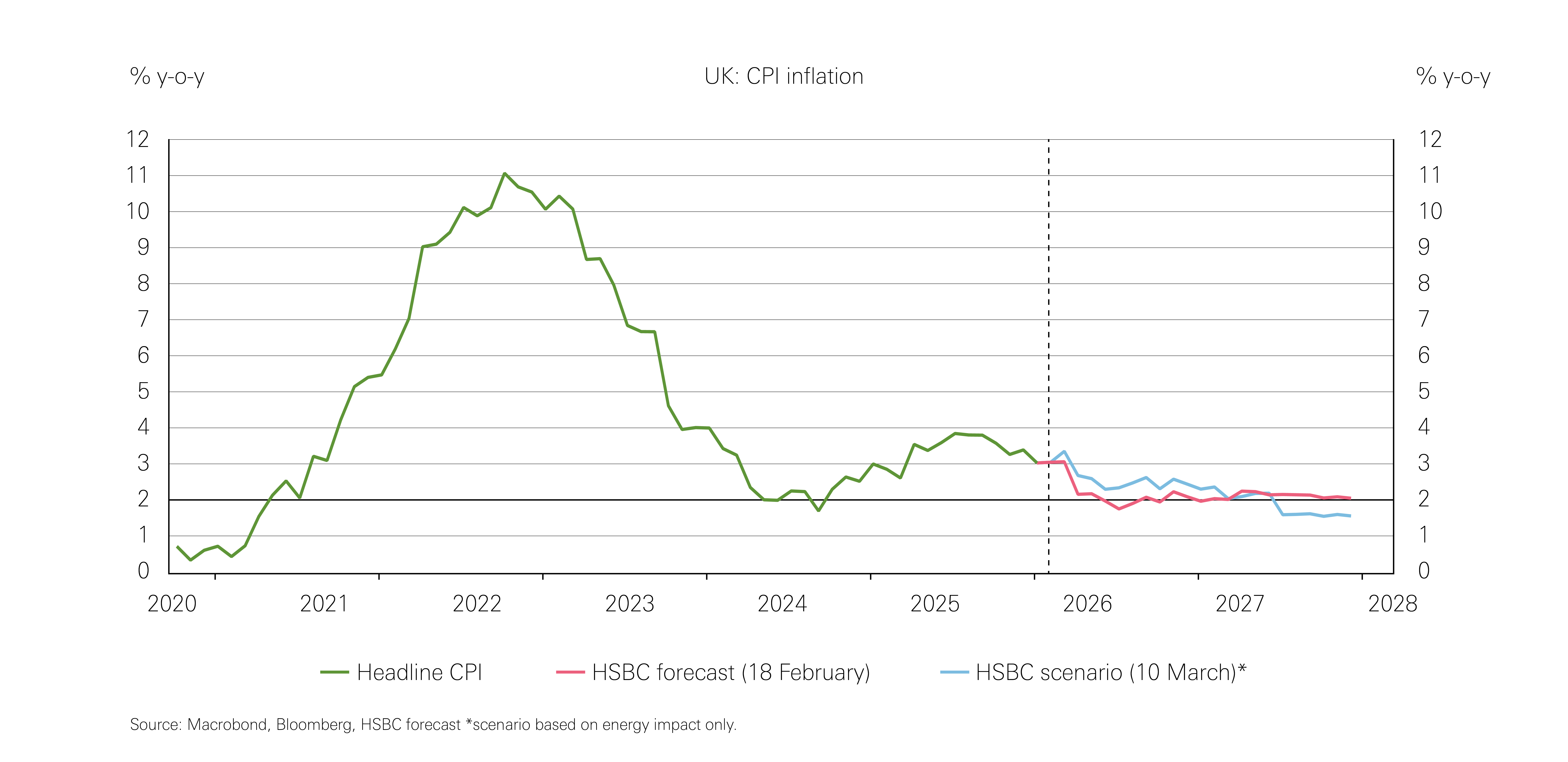
Although we never expected the improved momentum in the first two months of the year to persist at an ever-improving pace over 2026 – recent years have seen a short-lived post-Autumn Budget bounce-back in Q1 – our expected narrow path for greater optimism this year risks being thrown off course by the conflict in the Middle East. Underpinning our outlook for the UK was greater stability and confidence, for CPI inflation to fall to 2.0% (the Bank of England’s (BoE) target), and for interest rates to be cut to 3.00% this year.
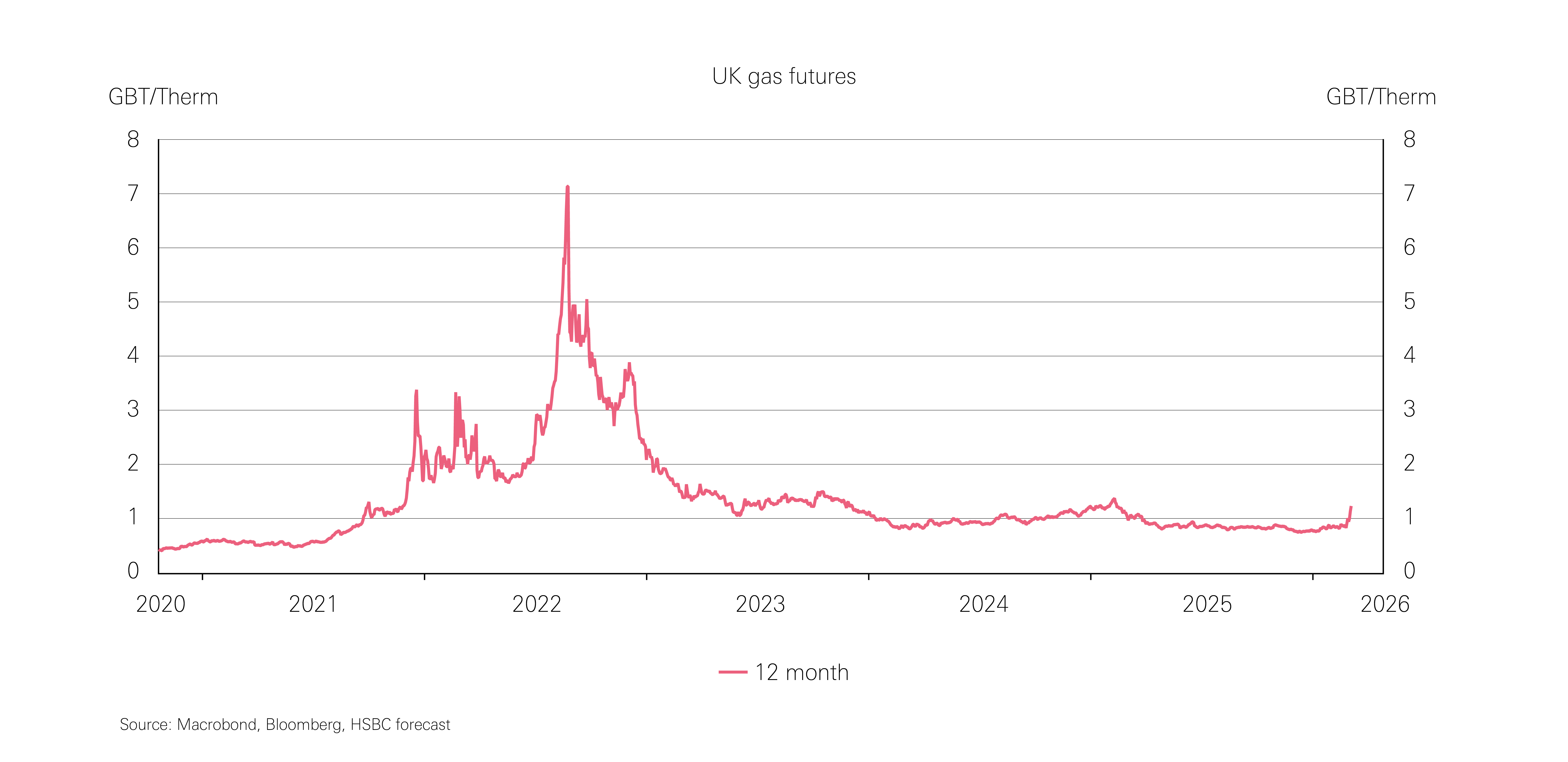
In light of the events in the Middle East, the Strait of Hormuz has been disrupted, some oil production halted, and energy prices have jumped. Although, HSBC Global Investment Research expects energy prices to moderate over the course of the year, with energy prices at current levels inflation will likely stay materially above 2% over the coming months, higher than previously expected. Importantly, the inflationary impact and subsequent interest rate response depends on any further oil and gas price spikes and how long energy prices stay elevated. Given the uncertainty and possible broader impacts on the economy, we expect the Bank of England to err on the side of caution and leave Bank Rate unchanged until Q4 2026.
This content and much more is available for you on the Global Investment Research and Research App (App Store, Google Play). For research questions, please email: AskResearch@hsbc.com
Analyst Certification
The following analyst(s), economist(s), or strategist(s) who is(are) primarily responsible for this report, including any analyst(s) whose name(s) appear(s) as author of an individual section or sections of the report and any analyst(s) named as the covering analyst(s) of a subsidiary company in a sum-of-the-parts valuation certifies(y) that the opinion(s) on the subject security(ies) or issuer(s), any views or forecasts expressed in the section(s) of which such individual(s)is(are) named as author(s), and any other views or forecasts expressed herein, including any views expressed on the back page of the research report, accurately reflect their personal view(s) and that no part of their compensation was, is or will be directly or indirectly related to the specific recommendation(s) or views contained in this research report: Emma Wilks.Important disclosures
This document has been prepared and is being distributed by the Research Department of HSBC and is intended solely for the clients of HSBC and is not for publication to other persons, whether through the press or by other means.
This document is for information purposes only and it should not be regarded as an offer to sell or as a solicitation of an offer to buy the securities or other investment products mentioned in it and/or to participate in any trading strategy. Advice in this document is general and should not be construed as personal advice, given it has been prepared without taking account of the objectives, financial situation or needs of any particular investor. Accordingly, investors should, before acting on the advice, consider the appropriateness of the advice, having regard to their objectives, financial situation and needs. If necessary, seek professional investment and tax advice.
Certain investment products mentioned in this document may not be eligible for sale in some states or countries, and they may not be suitable for all types of investors. Investors should consult with their HSBC representative regarding the suitability of the investment products mentioned in this document and take into account their specific investment objectives, financial situation or particular needs before making a commitment to purchase investment products.
The value of and the income produced by the investment products mentioned in this document may fluctuate, so that an investor may get back less than originally invested. Certain high-volatility investments can be subject to sudden and large falls in value that could equal or exceed the amount invested. Value and income from investment products may be adversely affected by exchange rates, interest rates, or other factors. Past performance of a particular investment product is not indicative of future results.
HSBC and its affiliates will from time to time sell to and buy from customers the securities/instruments, both equity and debt (including derivatives) of companies covered in HSBC Research on a principal or agency basis or act as a market maker or liquidity provider in the securities/instruments mentioned in this report.
Analysts, economists, and strategists are paid in part by reference to the profitability of HSBC which includes investment banking, sales & trading, and principal trading revenues.
Whether, or in what time frame, an update of this analysis will be published is not determined in advance.
For disclosures in respect of any company mentioned in this report, please see the most recently published report on that company available at www.hsbcnet.com/research. HSBC Private Bank clients should contact their Relationship Manager for queries regarding other research reports. In order to find out more about the proprietary models used to produce this report, please contact the authoring analyst.
- This report is dated as at 11 March 2026.
- All market data included in this report are dated as at close 10 March 2026, unless a different date and/or a specific time of day is indicated in the report.
- HSBC has procedures in place to identify and manage any potential conflicts of interest that arise in connection with its Research business. HSBC's analysts and its other staff who are involved in the preparation and dissemination of
Research operate and have a management reporting line independent of HSBC's Investment Banking business. Information Barrier procedures are in place between the Investment Banking, Principal Trading, and Research businesses
to ensure that any confidential and/or price sensitive information is handled in an appropriate manner. - You are not permitted to use, for reference, any data in this document for the purpose of (i) determining the interest payable, or other sums due, under loan agreements or under other financial contracts or instruments, (ii) determining the price at which a financial instrument may be bought or sold or traded or redeemed, or the value of a financial instrument, and/or (iii) measuring the performance of a financial instrument or of an investment fund